

Duolingo: Language Lessons
Duolingo
I came away from Duolingo thinking of it less as a complete language course and more as an unusually effective way to make practice happen. That distinction matters. The app is free to start, friendly enough for a first session, and structured around short lessons that are easy to fit into a busy day. I found myself opening it for a few minutes when I would normally have postponed studying altogether.
Developed by Duolingo, this education app now reaches more than 500 million installs and holds a 4.6 average from roughly 41 million ratings. Those figures suggest broad appeal, but they do not mean it suits every learner. My experience was strongest when I used it as a daily habit builder, vocabulary refresher, and low-pressure introduction to a language. It was much less convincing as my only path toward fluent conversation.
What the learning experience feels like in daily use
The first thing I noticed was how quickly the app turns a vague goal into a concrete task. Instead of asking me to decide which grammar chapter to study, it presents a sequence of lessons and small exercises. I could complete a short round while waiting for coffee, riding public transport, or taking a break between other tasks. That reduction in decision-making is one of its most valuable design choices.
Related News

Carrier Services Review: The Android Layer That Makes Messaging Disappear

CodyCross: Crossword Puzzles - A Journey Through Words and Worlds

Google Play Books & Audiobooks Gets Reading Right by Staying Out of the Way
The lessons mix activities rather than making me stare at one long explanation. I encountered translation, listening, speaking, matching, and sentence-building work, depending on the course and point in the learning path. This variety kept the sessions from feeling like a worksheet, although some exercise types can become predictable after repeated use.
I particularly liked the immediate response after an answer. When I made a mistake, the app usually made the correction clear enough to continue without breaking the rhythm. That is useful for beginners who might otherwise stop after every unfamiliar sentence to search for an explanation. At the same time, the quick feedback sometimes felt too compressed. I could recognize the correct answer without fully understanding why my answer was wrong.
Related News

Why WhatsApp Messenger Still Makes Everyday Communication Feel Easy

Jurassic World: The Game Is the Better Dino Tycoon for Strategic Players

Threads in Real Life: Who Should Join, Lurk, or Leave

How SHEIN Turned Shopping Into an Endless Content Feed

How to Make Fortnite Feel Smarter on Mobile

Should You Switch to Microsoft Outlook on Mobile?
The strongest part of the experience is the habit loop. Lessons are divided into manageable steps, and the visual progress system gives each session a clear ending. I did not need to reserve a full hour or prepare a notebook before starting. For people who struggle with consistency, that convenience may matter more than a theoretically deeper course that rarely gets opened.
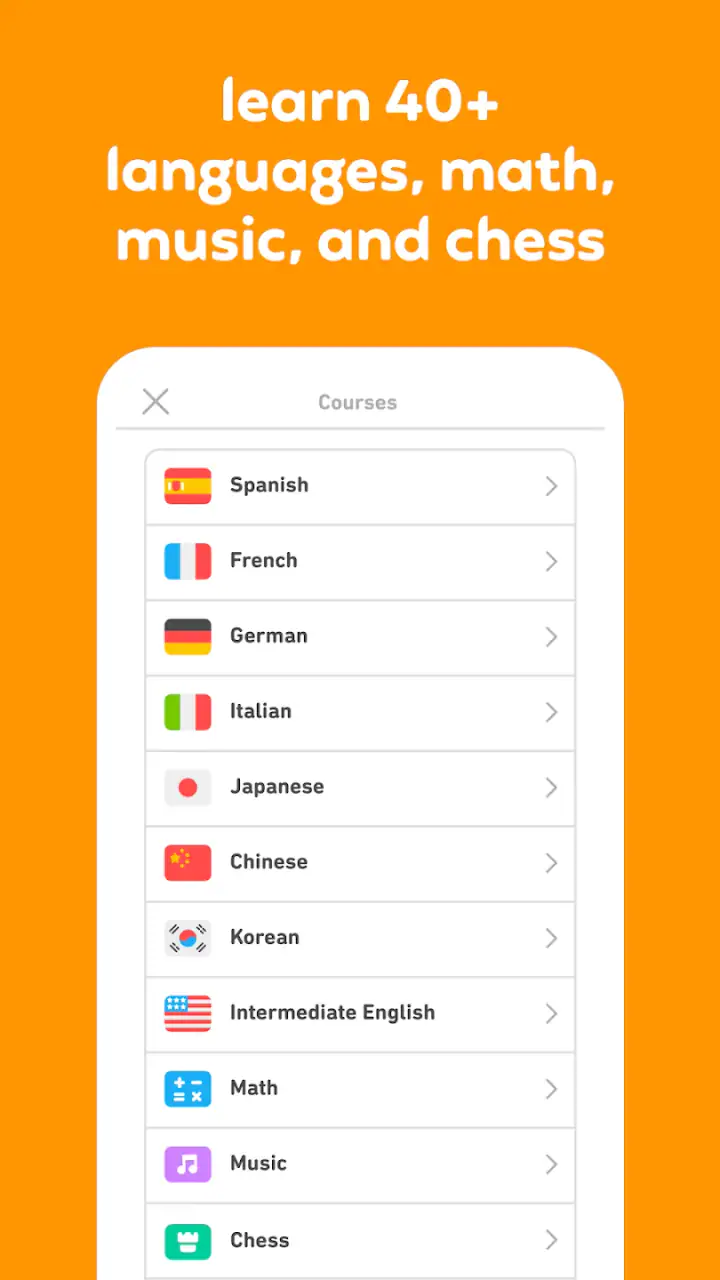
The app covers languages as well as subjects beyond traditional language study, including Math, Music, and Chess. That wider selection makes it feel like a general learning app rather than a single-purpose phrasebook. Still, the quality and depth of a course can vary depending on what you choose, so I would not assume that every subject offers the same kind of progression or practice.
Why the short lessons work better than expected
Short practice is not automatically effective, but Duolingo gives it enough structure to become repeatable. I found that a small session was useful when I had a specific purpose: reviewing basic words before a trip, keeping a recently studied language active, or rebuilding confidence after a long break. The app is especially good at removing the emotional barrier of “I need to study properly.”
Gallery
A practical routine is to use the regular lessons for new material, then spend a separate session revisiting errors or older vocabulary. If I rushed through only the easiest activities, I could maintain a streak without challenging myself much. Deliberately slowing down, reading each sentence aloud, and treating mistakes as study material produced better results than simply chasing completion.
Another useful approach is to say every unfamiliar sentence aloud, even when the exercise only asks for a tap or written response. This turns recognition into a small amount of active production. It is not a replacement for conversation, but it makes the app more valuable because I am training my mouth and ears instead of only my memory.
I also recommend keeping a separate note for phrases that feel useful in real life. The app introduces many sentences in a controlled learning environment, while everyday communication requires choosing words under pressure. Writing down a few expressions and later trying to use them in a message or conversation helped bridge that gap.
Where the app is genuinely strong
For a complete beginner, the low entry barrier is a major advantage. I did not need to know grammatical terminology or understand how to plan a curriculum. The early activities introduce common patterns gradually, and the repeated exposure makes basic words familiar. Someone who feels intimidated by textbooks may find this approach far easier to begin.
It is also a good companion for learners who already use another resource. I can imagine pairing it with a tutor, a class, graded reading, or conversations with native speakers. In that setup, Duolingo supplies frequent repetition between more demanding sessions. It is particularly handy for filling small gaps in the day when a lesson with a teacher is impossible.
The app’s broad reach is reflected in its age rating of Everyone, and the tone is generally approachable for younger learners as well as adults. That does not make it equally suitable for every child without supervision, since motivation and reading ability still matter, but the presentation is far less intimidating than many traditional study tools.
Its free price is another meaningful strength. I could explore the basic learning experience without committing money first. There are in-app purchases ranging from $0.99 to $239.99 per item, so anyone considering paid options should review the purchase screen carefully and decide whether the extra convenience is worth it for their own routine. The free access is enough to judge whether the lesson style works before spending anything.
The app was released on May 29, 2013, and its long presence helps explain why it feels polished in the basics. I would not treat age alone as proof of educational quality, but years of public use have clearly shaped a product that is easy to start and simple to revisit.
The limits that become clearer with serious study
My biggest reservation is that completing lessons can create a stronger feeling of progress than actual communicative ability. I could perform well on familiar exercise patterns while still hesitating when I had to form an original sentence. Recognition is easier than spontaneous speaking, and the app naturally gives more practice to the former.
Grammar explanations can also feel insufficient when a rule has several exceptions or when word order changes according to context. A learner who wants to understand the logic behind every sentence may need a textbook, teacher, or reference guide alongside the app. I often learned that an answer was correct before I understood the principle that made it correct.
Listening practice is useful, but controlled audio is not the same as real conversation. People speak with different accents, speeds, interruptions, and informal expressions. The app can prepare the ear for basic patterns, yet it cannot recreate the uncertainty of asking someone to repeat themselves or responding when the expected sentence is not presented on screen.
Speaking practice has a similar boundary. Repeating a prompted phrase can help with pronunciation and confidence, but it does not test whether I can explain an unexpected idea. Learners whose main goal is an interview, university study, relocation, or professional communication should add live interaction much earlier than the app’s comfortable progression might suggest.
The reward structure is motivating, but it can also encourage shallow behavior. When the main objective becomes preserving a streak or finishing a unit, I may choose speed over attention. My best results came when I ignored the temptation to treat the app like a daily scorecard and instead revisited difficult material until I could produce it without clues.
There is also a trade-off between simplicity and control. The guided path is excellent when I want someone else to organize practice, but less satisfying when I need to target a narrow topic, such as preparing for a specific workplace conversation. A more flexible course or a tutor may be better for learners with a precise short-term objective.
Who should use it, and who should look elsewhere
I would recommend it first to beginners, casual learners, travelers preparing basic phrases, and people returning to a language after a long pause. It is also well suited to students who need a daily supplement rather than another large course. If your main problem is inconsistency, the app addresses that problem directly by making the next session obvious and approachable.
It can work well for families or friends who want a shared learning routine, provided each person chooses a realistic pace. The playful presentation may help younger users stay engaged, while adults can benefit from the same short-session structure without needing to turn study into a major event.
I would be more cautious recommending it to an advanced learner seeking nuanced writing, specialized vocabulary, or natural conversation. It is not the tool I would rely on alone for a high-stakes language goal. A tutor is better when I need correction tailored to my recurring mistakes; a structured class is better when I need accountability and explanation; authentic podcasts, books, and conversations are better when I need to understand language outside controlled exercises.
That does not make the app weak. It means its best role is specific: it is a dependable practice engine, not a complete substitute for human communication. The more demanding the goal, the more important it becomes to combine it with resources that force original speaking, extended listening, and writing for real readers.
How I would build a useful routine with it
For an everyday schedule, I would begin with one focused lesson rather than trying to maximize the number of activities. During the lesson, I would speak answers aloud, pause on unfamiliar grammar, and avoid guessing rapidly just to keep moving. Afterward, I would write down a few words or phrases that I could imagine using outside the app.
On another day, I would use those notes to create a tiny real-world task: describe my breakfast, write a short message, label objects around the room, or summarize what I did that morning. This exposes the difference between recognizing an answer and generating one. The app supplies the material, while the extra task supplies the missing freedom.
For listening, I would not wait until the course feels advanced. I would add simple audio from another source and accept that understanding only part of it is normal. The app’s controlled exercises can build confidence, but outside audio prevents that confidence from becoming dependent on familiar voices and predictable sentence formats.
If I were preparing for travel, I would focus on practical phrases and then rehearse variations rather than memorizing one exact sentence. For example, learning how to ask where something is is more useful when I can replace the destination, change the politeness level, and understand a short reply. This is where the app’s patterns become a foundation rather than a final answer.
Users should also decide early whether the free experience is enough for them. Since the app is free but offers paid items from $0.99 up to $239.99, I would not purchase anything simply because a reminder or reward makes it feel urgent. I would first use the basic lessons consistently, identify the exact inconvenience I want to solve, and then judge whether a paid option addresses it.
My final assessment
Duolingo succeeds because it makes language practice feel possible on ordinary days. I found its lessons approachable, its progression easy to follow, and its repetition genuinely helpful for basic recall. The free starting point lowers the risk, and the broad subject selection gives the app value beyond one language course.
Its weakness is equally clear: the smooth lesson loop can hide how much work remains before comfortable real-world communication. Learners need to speak freely, listen to unpredictable people, and use language for purposes the app cannot fully simulate. Anyone expecting a complete replacement for a teacher or immersion will probably outgrow it.
My recommendation is therefore positive but specific. Use it if you want a practical daily foundation, especially when consistency has been your biggest obstacle. Use it alongside conversation, reading, listening, or formal instruction if your goal is serious fluency. The best way to think about Duolingo is as the habit that keeps learning alive between deeper experiences. For that role, it is one of the most approachable choices in education apps, and it earns its place on my phone.
FAQs for Duolingo: Language Lessons
Is Duolingo free to use?
Yes, Duolingo offers a free version that provides access to a wide range of language lessons. The free version includes ads and some limitations on features like offline access and unlimited test attempts. For an ad-free experience with additional features, you can opt for Duolingo Plus, which is a paid subscription.
How effective is Duolingo for learning a new language?
Duolingo is highly effective for beginners and intermediate learners. It uses gamification to make learning engaging, offering bite-sized lessons that focus on vocabulary, grammar, and pronunciation. However, it may not be sufficient for advanced fluency, so pairing it with other resources or real-life practice is recommended for comprehensive learning.
Can I learn multiple languages simultaneously on Duolingo?
Yes, Duolingo allows users to learn multiple languages at the same time. You can easily switch between languages in your profile settings. This flexibility is great for polyglots or those interested in exploring different languages, though it's important to manage your time efficiently to avoid becoming overwhelmed.
Does Duolingo offer offline learning?
Offline learning is available through Duolingo Plus, the app's premium subscription. With Duolingo Plus, you can download lessons to continue learning without an internet connection. This feature is particularly useful for travelers or users with limited internet access, ensuring uninterrupted learning.
What languages can I learn with Duolingo?
Duolingo offers a diverse selection of languages, including popular options like Spanish, French, German, and Mandarin, as well as less common languages such as Welsh, Hawaiian, and Swahili. The app continues to expand its offerings, making it a versatile tool for language learners of various interests.
Pros
- Engaging gamified learning experience.
- Diverse range of languages offered.
- Short
- manageable lesson structure.
- Free version with substantial content.
- Interactive exercises enhance retention.
Cons
- Limited depth in advanced language skills.
- Ads can be intrusive in free version.
- Some languages lack comprehensive courses.
- Grammar explanations can be sparse.
- Inconsistent difficulty across lessons.


